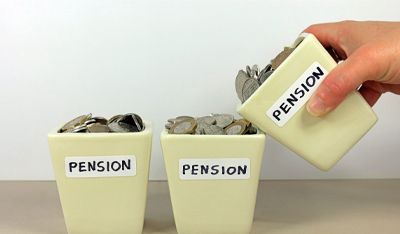


Moving to a new employer every few years is commonplace when building a career, but this can result in having several different pensions. Moneysprite is often asked how this situation can be managed and whether pension consolidation is the best option. Getting a good understanding of how to do this and if it is the right choice for you is an important part of planning for retirement.
What does pension consolidation involve?
Consolidating your pension involves combining the money that you have put into two or more pension schemes. In the UK, this is usually done with defined contribution pensions. These are pensions into which an individual and their employer have contributed a percentage, and government tax relief is added. The amount that it is worth depends how well that money has performed from an investment perspective.
The first step in the process is to find each pension and ascertain what type it is, how much it is worth, how it is invested and any charges and transfer rules that may need to be considered. If you are having trouble locating a pension, a pension tracing service can be used.
Advantages and disadvantages of consolidating pensions
The main advantage of consolidating your pensions is that they can become much easier to manage. A single account gives you a transparent view of exactly how much you have saved, how investments are performing and a plan for your retirement. Combining your pensions can also be a cost-saving option if your provider(s) charge management and administration fees.
However, it is not a certainty that you will pay lower fees if you decide to combine your pensions. Check how much you might need to pay in pension consolidation fees. These can include charges for exiting a scheme you previously paid into, transfer costs or higher ongoing charges. Therefore, it is important to check the whole cost of consolidation, as well as the potential change in investment options.
You may be disadvantaged in terms of some benefits if you consolidate your pensions. For example, some pensions have guaranteed annuity rates, protected pension access ages and bonuses that are dependent on profits. If you are in a final salary scheme, consolidating your pensions can mean that you are risking a certain retirement income in favour of investment potential.
Before deciding whether to consolidate, read MoneyHelper's guide to whether you should transfer or combine your pensions, which explains the potential benefits, costs and risks of transferring different types of pension.
Should I consolidate pensions?
Pension consolidation should only be considered after a rigorous examination of each pot to include benefits and potential fees. You should also evaluate the expected outcome of transferring your pensions, compared with how your retirement will look if you keep them separate. However, you do not have to do this alone. Contact us today to find out how we can help you to make the best choices for your future retirement.
The value of your investments and any income from them can fall as well as rise. You may not get back the amount you invested.
HM Revenue and Customs practice and the law relating to taxation are complex and subject to individual circumstances and changes which cannot be foreseen.
Pension consolidation advice is available. If you hold a Defined Benefit Pension Scheme or Defined Contribution pension with a guaranteed minimum pension or income, any advice you receive will be through a dedicated referral advice service and a specialist within our network.
Approved by Openwork Limited on 04/11/2026.